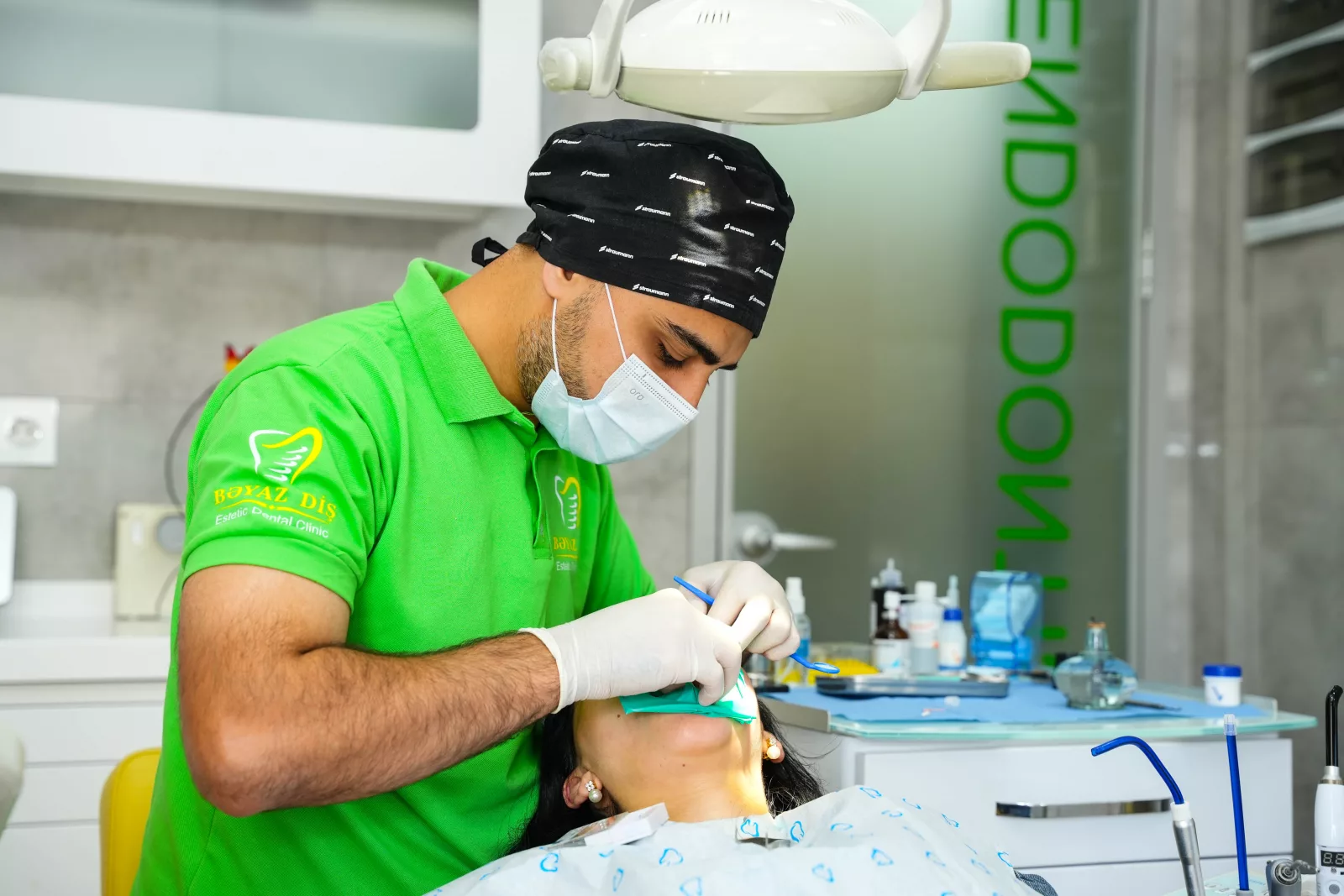
A smile is an important part of facial expression. The colour, shape and alignment of the teeth can affect its overall appearance. If the front teeth have discolouration, small chips, differences in shape or gaps, you may wish to improve the appearance of your smile. Dental veneers are one of the cosmetic dentistry options that may be considered for this purpose.
At Bəyaz Diş Clinic, we recognise the importance of planning every treatment according to the patient’s needs and oral health. Before deciding on veneers, the teeth and gums should be examined, and the available options discussed with a dentist. Along with an aesthetic result, protecting the health of your teeth remains a priority.
What are veneers?
A veneer is a thin, custom-made covering that is bonded to the front surface of a tooth. It may help improve certain cosmetic differences and create a more harmonious-looking smile. Veneers are generally made from porcelain or composite resin.
The colour, shape and size of each veneer are selected to suit the patient’s teeth and overall appearance. To achieve a natural-looking result, a dentist may consider not only tooth colour but also facial features, tooth position and the smile line. Since every patient’s teeth are different, the treatment plan should be individualised.
When may veneers be considered?
Following a dental examination, veneers may be considered for certain cosmetic concerns, including:
discolouration and some stains;
small chips and surface imperfections on the front teeth;
minor differences in tooth shape or size;
small gaps between the front teeth;
uneven-looking tooth edges;
the need for greater visual balance in the smile.
Veneers are not suitable for every dental problem. Extensive decay, significant damage, gum disease or complex bite problems may require other treatment first. In some cases, orthodontic treatment, teeth whitening, fillings or crowns may be more appropriate. The suitable option is determined after a dental examination.
Types of veneers
Porcelain veneers
Porcelain veneers are made in a dental laboratory to fit the patient’s teeth. Porcelain’s light-reflecting properties may help create an appearance similar to natural teeth. The colour and shape are selected as part of the treatment plan.
In some cases, a small amount of enamel may need to be removed from the front surface of the tooth to place a porcelain veneer. Since this change may be irreversible, the need for it and the amount involved should be carefully assessed during the examination.
Composite veneers
Composite veneers are made by applying and shaping tooth-coloured material on the tooth surface. The procedure depends on the clinical situation. One potential advantage of composite material is that it may be relatively straightforward to repair in some cases. However, over time, it may become discoloured or show surface wear.
The choice of material depends on the patient’s expectations, the condition of the teeth, bite characteristics and the dentist’s assessment.
How is veneer treatment planned?
Treatment begins with a consultation and an examination of the mouth. The dentist assesses the teeth, gums and bite, and learns about the patient’s cosmetic goals. Whether veneers are appropriate, and which teeth they may be suitable for, is determined after this examination.
Additional assessments may be carried out if needed to evaluate the teeth in more detail. The expected appearance, material, stages of treatment and home-care instructions are discussed with the patient as part of the plan.
The preparation and placement of veneers depend on the material selected and the clinical situation. Porcelain veneers usually involve a laboratory stage, while composite veneers may sometimes be shaped directly on the teeth. The specific timeline and steps are explained during the consultation.
What should be considered before getting veneers?
Although veneers are a cosmetic dental treatment, their suitability should be assessed with the health of the teeth in mind. If tooth decay, gum inflammation or other oral health issues are present, these may need to be addressed before veneer treatment. Tell your dentist if you grind or clench your teeth, as this can affect the forces placed on veneers.
It is also important to have realistic expectations. Veneers may improve the appearance of teeth, but they do not resolve every dental health problem. Following an examination, the dentist should explain any limitations and possible alternatives.
Caring for veneers
Veneers do not replace daily oral hygiene. Brush twice a day, clean between your teeth and follow your dentist’s recommendations. Regular check-ups help monitor the condition of your teeth, gums and veneers.
Everyday habits can also affect the condition of veneers over time. Avoid biting very hard objects, opening packages with your teeth or engaging in other habits that may damage them. If you grind or clench your teeth, your dentist may discuss a custom protective appliance.
If a veneer chips, becomes loose, causes discomfort or is accompanied by changes in the gums, do not try to repair it yourself—contact your dental clinic.
An individual approach at Bəyaz Diş Clinic
Veneer treatment is not only about changing the appearance of teeth. It also involves planning an appropriate, balanced result while taking the patient’s oral health into account. At Bəyaz Diş Clinic, an initial examination can be used to discuss the patient’s needs, the condition of the teeth and possible treatment options.
To find out whether veneers may be suitable for you, you can book an appointment for a dental examination. The dentist will assess your teeth and explain the options, treatment stages and care recommendations relevant to your situation.
Bəyaz Diş Clinic — an individual approach and professional dental care for your smile.