What is a coronectomy? An alternative to wisdom tooth removal
· 2 min read · Bəyaz Diş
When the roots of a wisdom tooth lie very close to the nerve, a coronectomy — removing only the crown of the tooth — lowers the risk of nerve injury.
In dentistry, not every wisdom tooth has to be removed completely. Especially when the roots of the lower wisdom teeth lie very close to the nerve inside the jaw, surgery can carry certain risks. One of the alternatives used in such cases is a coronectomy.
A coronectomy is a procedure in which only the visible crown of the wisdom tooth is removed surgically, while the roots are left in the jaw under certain conditions.
Why is a coronectomy performed?
The roots of the lower wisdom teeth sometimes sit very close to the inferior alveolar nerve. This nerve plays an important role in the sensation of the lower lip, the chin and some of the teeth.
If removing the whole tooth would put this nerve at risk, the dentist may consider a coronectomy as an alternative treatment.
The main goals of the method are to:
reduce the risk of nerve injury;
keep possible surgical complications to a minimum;
plan the treatment of wisdom teeth that lie close to the nerve more safely.
How is the procedure carried out?
A coronectomy is performed by an oral and maxillofacial surgeon under local anaesthesia.
During the procedure:
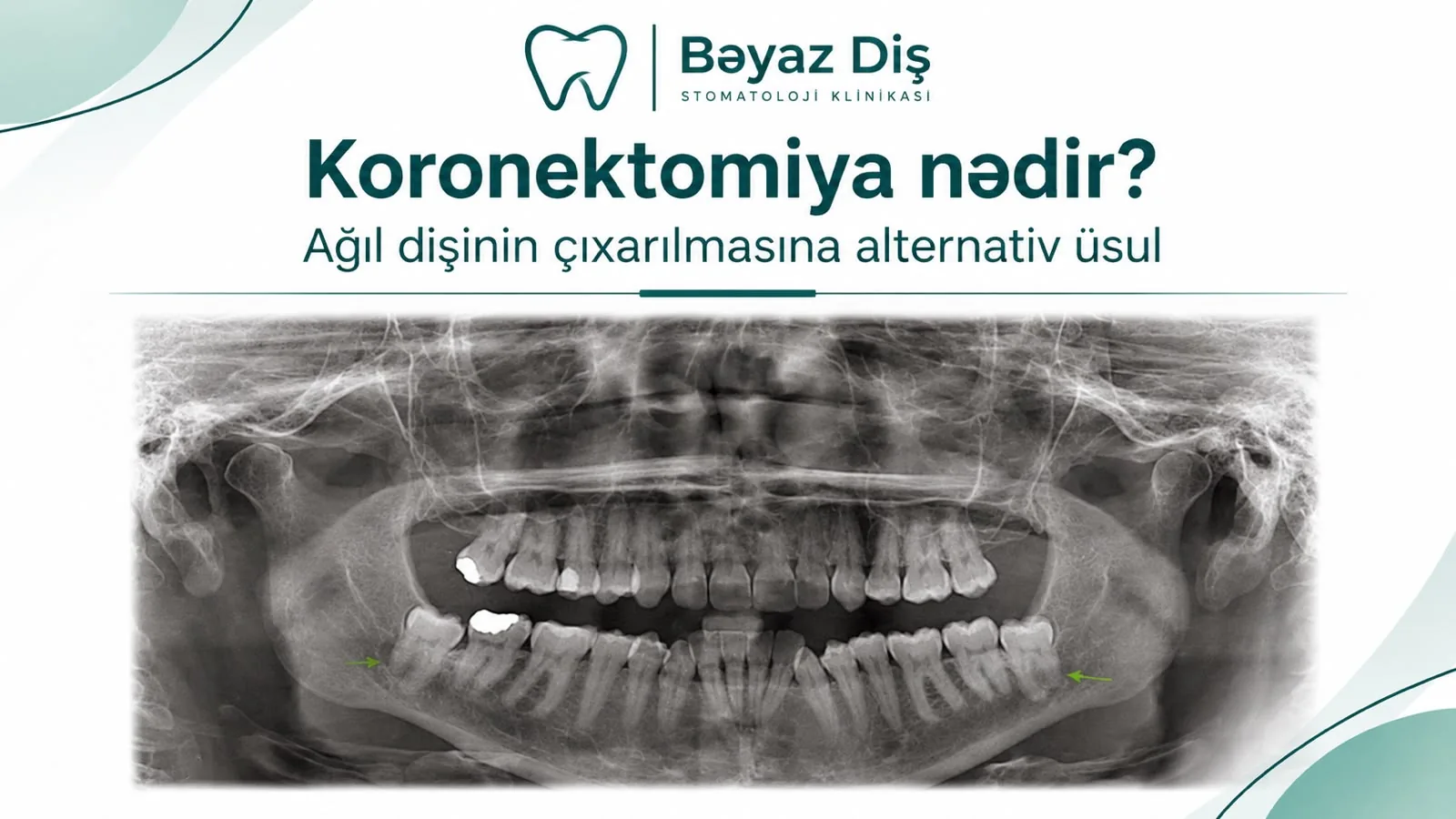
First, the tooth is assessed with a clinical examination and an X-ray.
If needed, a 3D scan is taken to see exactly how the roots relate to the nerve.
The crown of the tooth is carefully separated from the roots and removed.
The roots are checked and the surgical area is cleaned.
The area is closed with stitches and the patient is given aftercare instructions.
Is a coronectomy suitable for everyone?
No. The procedure is not used for every wisdom tooth.
A coronectomy can be considered when the roots are healthy and certain clinical conditions are met. If there is infection, deep decay in the roots or another unsuitable condition, the method may not be recommended.
That is why the treatment method is chosen only after a thorough examination by the dentist.
What to watch for after the procedure
As with any other surgery, a coronectomy needs a period of healing.
In some cases there may be:
pain and swelling in the treated area;
infection;
delayed healing;
movement of the retained roots over time.
This is why regular check-ups and attending the recommended examinations are important.
Advice from Bəyaz Diş
To make the right decision about wisdom tooth treatment, each patient's individual anatomy must be taken into account.
At Bəyaz Diş your health and safety are our main priority. With modern diagnostics and a personalised approach, we find the right dental solution for every patient.
Remember: the right diagnosis is the first step towards a healthy smile!
Bəyaz Diş – your health and your smile matter to us.
From 2001 to 2006, Dr. Telman Haji studied at the Faculty of Dentistry of Azerbaijan Medical University. In 2007, he completed his internship at City Polyclinic No. 3. He currently works as an orthodontist at Bəyaz Diş Dental Clinic.
Dr. Nicat Abbasov earned his bachelor’s degree at the Ukrainian Medical and Dental Academy between 2009 and 2014. From 2015 to 2017, he completed clinical residency training in oral and maxillofacial surgery at the N. V. Sklifosovsky Poltava Regional Clinical Hospital.
From 2018 to 2023, Dr. Nazrin Amiraslanova studied at Pavlov First Saint Petersburg State Medical University. Her professional knowledge, attentive manner, and patient-centered approach help her support patients and their families in maintaining healthy mouths and beautiful smiles.